Last updated: May 13, 2026
Buyers often think the sample stage is about checking whether a garment looks good. It is much more than that. Sampling is where you verify fit, pattern balance, fabric behavior, stitching quality, trim execution, labeling, and packaging logic. If your approval process is loose, bulk production will inherit those same loose standards.
The four sample stages most brands use
- Development sample: Used to turn the idea into a physical garment and test basic feasibility.
- Fit sample: Focused on measurement, balance, shape, and wearability.
- Salesman or photo sample: Optional, but useful when presentation quality matters.
- Pre-production sample: The final reference before bulk manufacturing begins.
What to review on every sample
Fit and measurements
- Check all critical points of measurement against the spec sheet.
- Review how the garment sits on body, not only flat measurements.
- Confirm ease, length, neckline, sleeve opening, and hem behavior.
Construction and stitching
- Review seam type, stitch consistency, reinforcement points, and inside finishing.
- Look for twisting, puckering, uneven topstitching, or weak stress areas.
- Check that construction matches the intended market position of the product.
Fabric and trim accuracy
- Confirm composition, weight, hand feel, color, and recovery.
- Check zipper type, button quality, drawcord finish, elastic behavior, and label quality.
- Make sure substitutions are approved, not assumed.
Branding and compliance
- Verify main label, size label, care label, and country-of-origin treatment.
- Check logo size, placement, and print or embroidery quality.
- Review any barcode or external tag information that will be used later in packing.
How to comment on samples clearly
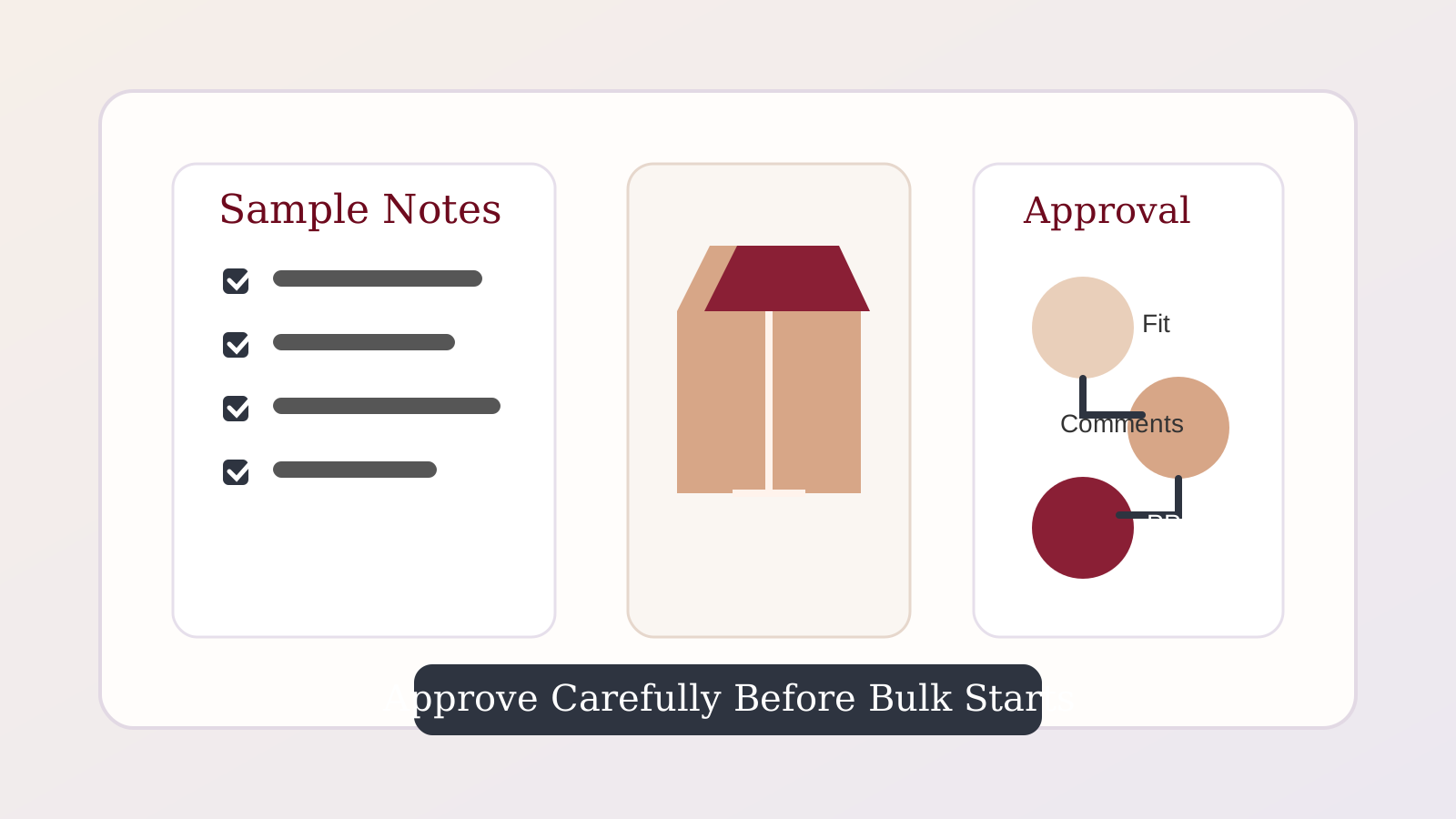
Good comments are specific, visual, and prioritized. Instead of writing "improve fit," write "reduce waist circumference by 2 cm, raise armhole by 0.8 cm, and reduce front neckline width by 0.5 cm." Mark comments on photos when possible so the factory sees exactly where the issue is.
Revision control mistakes to avoid
- Too many approval channels: If three people send different comments, the factory will guess which version matters most.
- No final approved reference: Always identify one approved sample as the bulk standard.
- Untracked spec changes: If measurements change, update the tech pack and size chart immediately.
- Approving with unresolved notes: "Approve, but please improve" is not a reliable production instruction.
Pre-production sample checklist
- Fabric, color, and finish match approval
- All critical measurements are within tolerance
- Construction and seam quality are approved
- Labels and trims are correct and placed properly
- Packaging method is reviewed if applicable
- Factory has the current approved tech pack and comment history
- Bulk production is not released until this sample is signed off
Why sample discipline saves money
Every issue solved at the sample stage prevents bulk rework, delay, or discounting later. Brands usually feel sample revisions are slowing them down, but rushed approvals often create much longer delays after production begins.
Useful references for sample approval
- Tech pack control: Keep one current version of the measurement chart, construction notes, and comment history so every stakeholder is working from the same file.
- Fit photography: Front, back, and side photos often prevent confusion that written comments alone do not resolve.
- Approval discipline: Use one clearly named approved sample as the bulk standard and archive older revisions.
- Testing: For sensitive fabrics or washes, a quick wear or wash test before bulk can prevent costly surprises later.
Bottom line
A sample is not just a preview. It is your main control point before bulk risk begins. Treat sample approvals as a disciplined process with one reference standard, one comment stream, and clear sign-off rules. That is how brands protect fit, quality, and launch timing.