Last updated: May 13, 2026
Many growing brands treat reorder timing as a guess. They restock too late, lose sales, and switch to expensive freight. Or they scale too early and lock cash into inventory that moves slower than expected. Good reorder planning sits between those two mistakes. It is about reading sell-through, lead time, and stock depth early enough to make calm decisions.
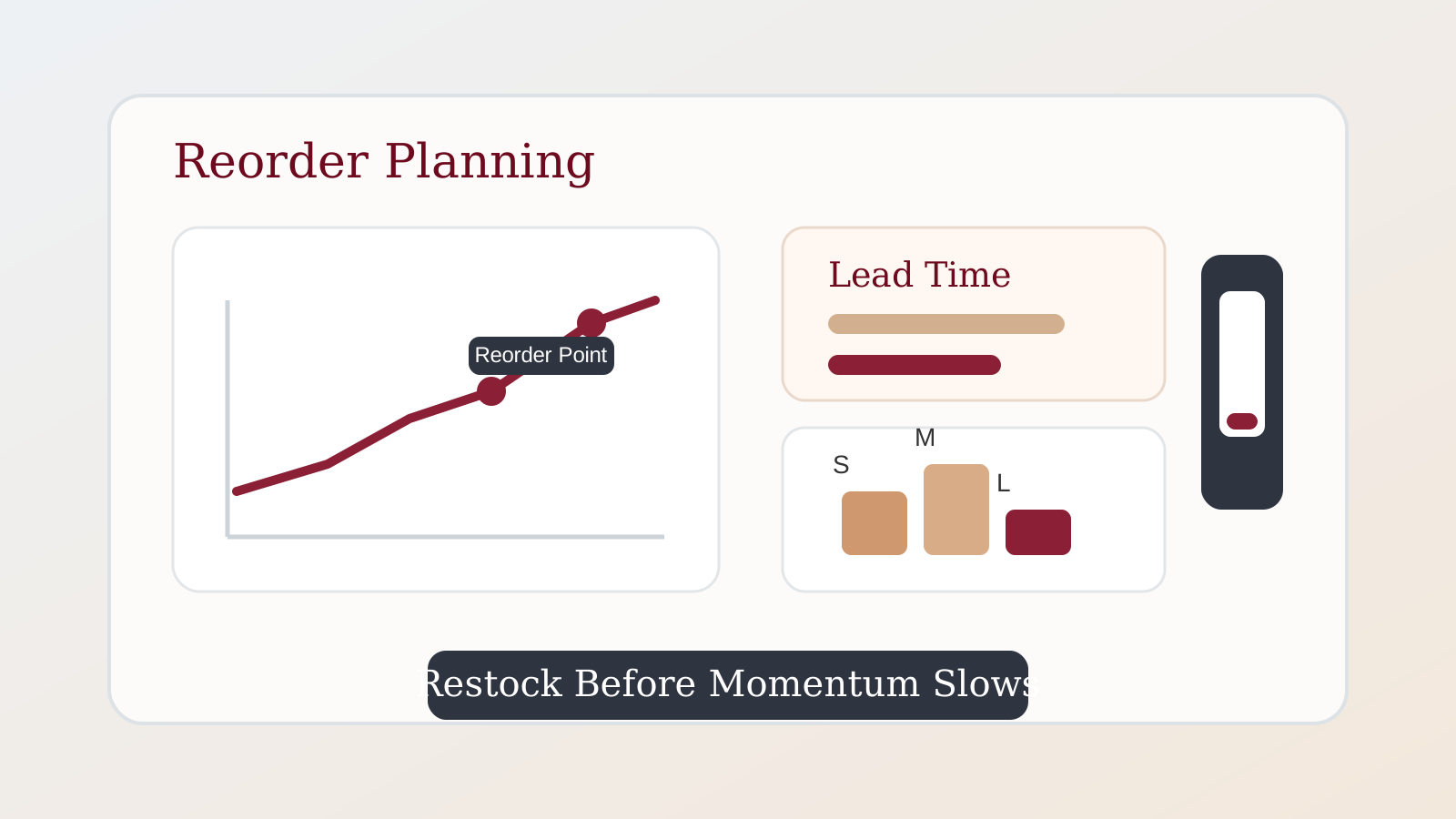
The three numbers to track first
- Weekly sell-through: How many units are actually leaving inventory each week by style, color, and size.
- Total lead time: Sampling updates, fabric booking, bulk production, packing, and transit time together.
- Minimum viable reorder: The lowest order quantity that still makes financial and operational sense.
When to place a reorder
A practical rule is to reorder when current sellable stock is approaching your full replenishment lead time plus a safety buffer. If it takes eight weeks to produce and deliver a reorder, and your best style sells fifty units per week, you should not wait until only one or two weeks of stock remain.
Signals that a style deserves scaling
- Consistent sell-through across more than one launch window
- Low return rate and stable customer feedback
- Balanced size performance instead of only one size carrying the style
- Minimal revision needs in production or packing
- Healthy margin even after ads, marketplace fees, or markdown risk
Signals that a style should stay in test quantities
- Sales depend on discounts or constant paid promotion
- One or two sizes dominate while others sit stagnant
- Fit comments or quality claims are still inconsistent
- Fabric or trim availability is unstable
- The style works better as a short seasonal drop than a core SKU
Why lead time planning matters more than many brands expect
Factories do not only need sewing time. Fabric sourcing, approvals, dyeing, printing, labeling, and packing all affect readiness. Then freight and receiving add another layer. Brands that plan only around the cut-and-sew timeline usually reorder too late.
Reorder planning mistakes to avoid
- Ignoring size curve data: If medium and large sell out first, repeat orders should not copy the original size ratio blindly.
- Using one generic safety stock rule: Core basics and trend pieces need different buffers.
- Scaling before process stability: If approvals, QC, or packaging are still inconsistent, a bigger order only creates a bigger problem.
- Waiting for a full stockout: That usually leads to lost ranking, lost momentum, and more expensive freight choices.
How low-MOQ factories help smart reordering
Lower MOQs make it easier to reorder in tighter cycles, test revised size ratios, and keep capital moving. For many young brands, this creates healthier growth than jumping too quickly to very large production runs just to save a small amount per unit.
A practical reorder review every brand can run
- Rank styles by weekly unit sales and gross margin
- Check size-level stockouts and dead sizes separately
- Review return reasons before committing more units
- Confirm fabric and trim availability for the next run
- Place orders early enough to absorb one normal delay without missing target stock dates
Useful references for reorder planning
- Sell-through data: Track weekly performance by style, color, and size instead of using one blended style average.
- Lead-time tracking: Separate fabric, approvals, production, and freight so your reorder model reflects real bottlenecks.
- Return analysis: A style with strong demand but repeated fit complaints may need revision before a larger run.
- Size-curve review: Reorders should reflect actual size demand, not automatically repeat the first run ratio.
Bottom line
Reordering is not just an operations task. It is a growth decision. The right timing protects sales, keeps freight costs under control, and helps you scale only the styles that have really earned it. Track sell-through, lead time, and style stability together, and your restocks will become much more predictable.